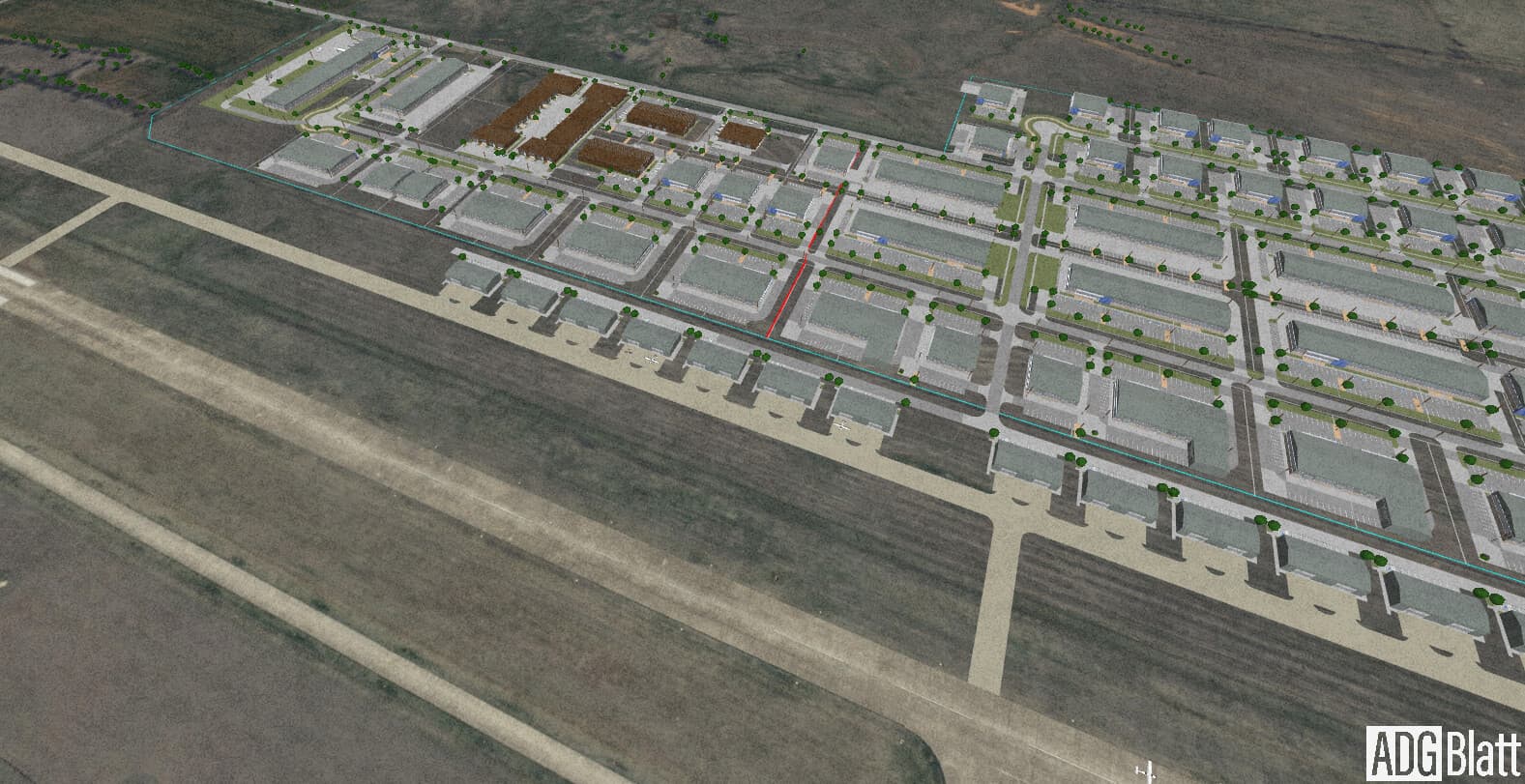
The hardest parts share one fixable barrier: technical data that isn't ready to use.
Where the data is ready, industry answers. Where it isn't, buys fail and sources go sole. MILHUB scores technical data readiness, closes the gaps under Air Force engineering authority, and collocates the manufacturers who build the result — on 284 acres about 45 minutes from Tinker AFB.
No-Bids Per Month
Up from 500 per month in 2020
Solicitations, No Award
Public-data sample of 4,774 NSNs
Parts, Two or Fewer Suppliers
1,318 rate high or critical obsolescence
Demand Already Queued
Forecast through 2030 — 113M units
No-bids more than doubled
500 per month in 2020, 1,200 per month in 2024 — and grown since, by the wing's own reporting. Our public-data sample sees the same: 28.8% of solicitations end with no award.
Tech data locks out suppliers
AMSC G is the only code supporting full and open competition. Every other assignment means rights, data, tooling, or qualification stands in the way.
Supply base is thin and aging
2,267 parts have two or fewer current suppliers. 1,318 rate high or critical obsolescence risk. The machine-shop base shrank 4.3% since 2021.
Demand is committed either way
$2.61B in forecast requirements through 2030 on the sampled parts — 113 million units. The demand is queued. Whether supply can answer it is the open question.
Public-data sample: 4,774 NSNs • solicitation and award history 2021 to present • a small slice of what the wing manages every day
The MILHUB Process
From Forecast to Open Competition
Five steps — see the issue coming, fix the data, prove the part, open the buy. Air Force decisions at every gate. Government-owned data throughout.
Forecast / Identify
Predict part issues before the buy fails.
Assess TDP Readiness
Score what exists, what is missing, how hard the rebuild is.
Close the Gap
Engineering authority approves the rebuild. Data stays Government-owned.
Prototype
Air Force-led. The hub adds capacity only where gaps exist.
Source
Compete among hub manufacturers, or put it on the street.
An idea to put on the table
TDP Readiness Levels (TDP-RL)
TRLs measure technology. MRLs measure manufacturing. Nothing measures whether the data can support a buy.
TDP-RL 1
Absent
TDP-RL 2
Fragmentary
TDP-RL 3
Complete, unvalidated
TDP-RL 4
Validated
TDP-RL 5
Production-proven
What MILHUB Brings
Orchestration, Not Another Factory
Manufacturers, industry partners, and suppliers can each solve their piece. What has been missing is the layer that puts the technical data, the qualified capacity, and the buy decision on the same table.
The Data Nobody Else Assembles
BOM360 already runs in the TITAN environment, indexing every part to its drawings and schematics. Steps 02 and 03 attach technical orders, specs, configuration, and supply risk to that spine — producing a technical data package scored against MIL-STD-31000C.
The Manufacturers, Collocated
Forging, machining, additive, coatings, and the qualification lab on one campus. When these capabilities are scattered across the country, a single part waits on each handoff. On one site, the handoffs stop being schedule risk.
Competition That Actually Opens
A complete, validated, Government-owned package is what turns a sole-source part into a competed one. The Air Force rebuilds and keeps its own technical baseline for the usable life of the asset.
One Auditable Record
Every part gets a case file — scorecards, extractions, gap tasks, prototype status, qualification evidence. Agents assemble it. People decide. Nothing about the chain from risk signal to award is reconstructed after the fact.
Strategic Alignment
Built for the Priorities the Department Already Set
Rebuilding the arsenal, breaking vendor lock, and growing nontraditional suppliers are stated national priorities. MILHUB is not a new idea competing with them — it is the execution of them at one site, on one wing's hardest parts.
Break vendor lock
The department names vendor lock as a barrier and calls for procuring technical data packages for organic or third-party maintenance, with a standard of at least two qualified sources on critical components.
What MILHUB does: TDP readiness scoring is the measurable version of that goal — you cannot carry a second source for a part whose data cannot support a solicitation.
Shared infrastructure, collocated suppliers
The department's own campus model centers on collocating manufacturers of components and subcomponents while providing access to shared equipment — clustering industrial production capacity in one location to lower the barrier to entry.
What MILHUB does: That is the Chickasha build: repeating spec buildings, a shared qualification and NDE lab, and a reverse-engineering cell no single tenant would fund alone.
Grow nontraditional vendors
Expanding the industrial base now runs through vendor growth and supplier maturity — bringing in capable manufacturers that have never held a defense contract and getting them qualified.
What MILHUB does: Hub manufacturers enter recurring supplier-qualification cycles running through 2030, with America Makes accreditation pathways for additive work.
Speed of delivery as the organizing principle
Sustainment problems the department flags directly — parts obsolescence, single points of failure, long lead times — are described as inhibited by insufficient technical data.
What MILHUB does: Fixing the data is upstream of every other fix. A part cannot be sourced fast if the package it depends on takes months of engineering archaeology to assemble.
The Campus
284 Acres, Adjacent to the Runway
A collaboration anchored on the Chickasha Industrial Park — physical facilities plus a shared digital platform where government, industry, and academia work the same problem parts together.
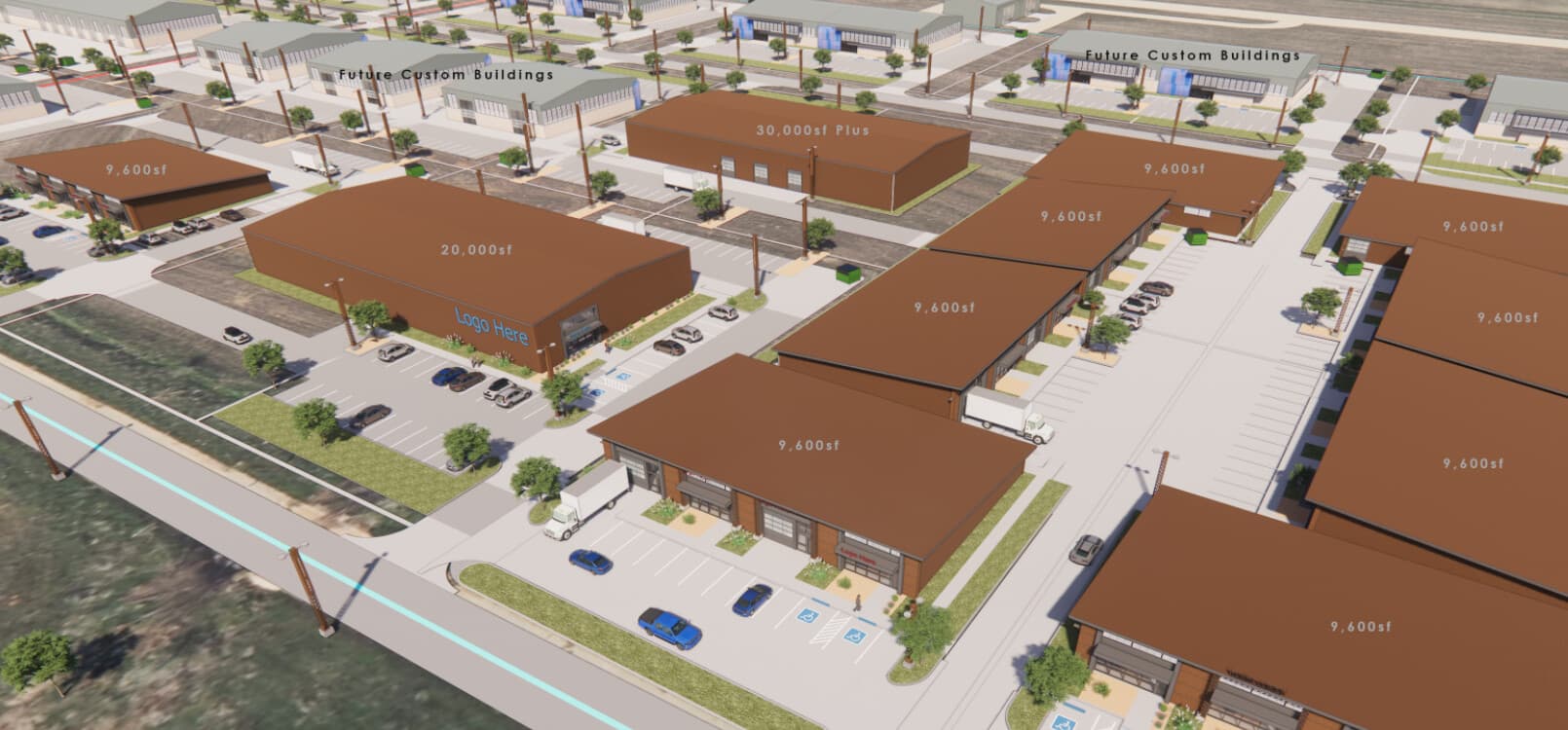
Spec Buildings
9,600 sf repeating units, a 20,000 sf anchor, and 30,000 sf plus large-format production. Take a bay, a building, or a pad.
Shared Qualification
Reverse-engineering cell, qualification and NDE lab, additive and precision-machining space — resources no single tenant would fund alone.
The Tinker Connection
51 miles from the largest depot in Air Force Materiel Command, with daily truck runs and a shared digital platform to the wing's teams.
Three Modes On Site
Union Pacific and Stillwater Central rail interchange, a 5,101 ft concrete runway, and direct highway access to I-44.
Built to Team
Predict the Part.
Complete the Data.
Open the Competition.
Beginning with the hardest parts on the list — worked side-by-side with wing teams, on a platform the Government owns.