MILHUB · Chickasha, Oklahoma
A National Manufacturing Hub, Built to Team
MILHUB is a collaboration anchored on the Chickasha Industrial Park — 284 acres of industry and manufacturing space about 45 minutes from Tinker AFB. Physical facilities plus a shared digital platform where government, industry, and academia work the same problem parts together.
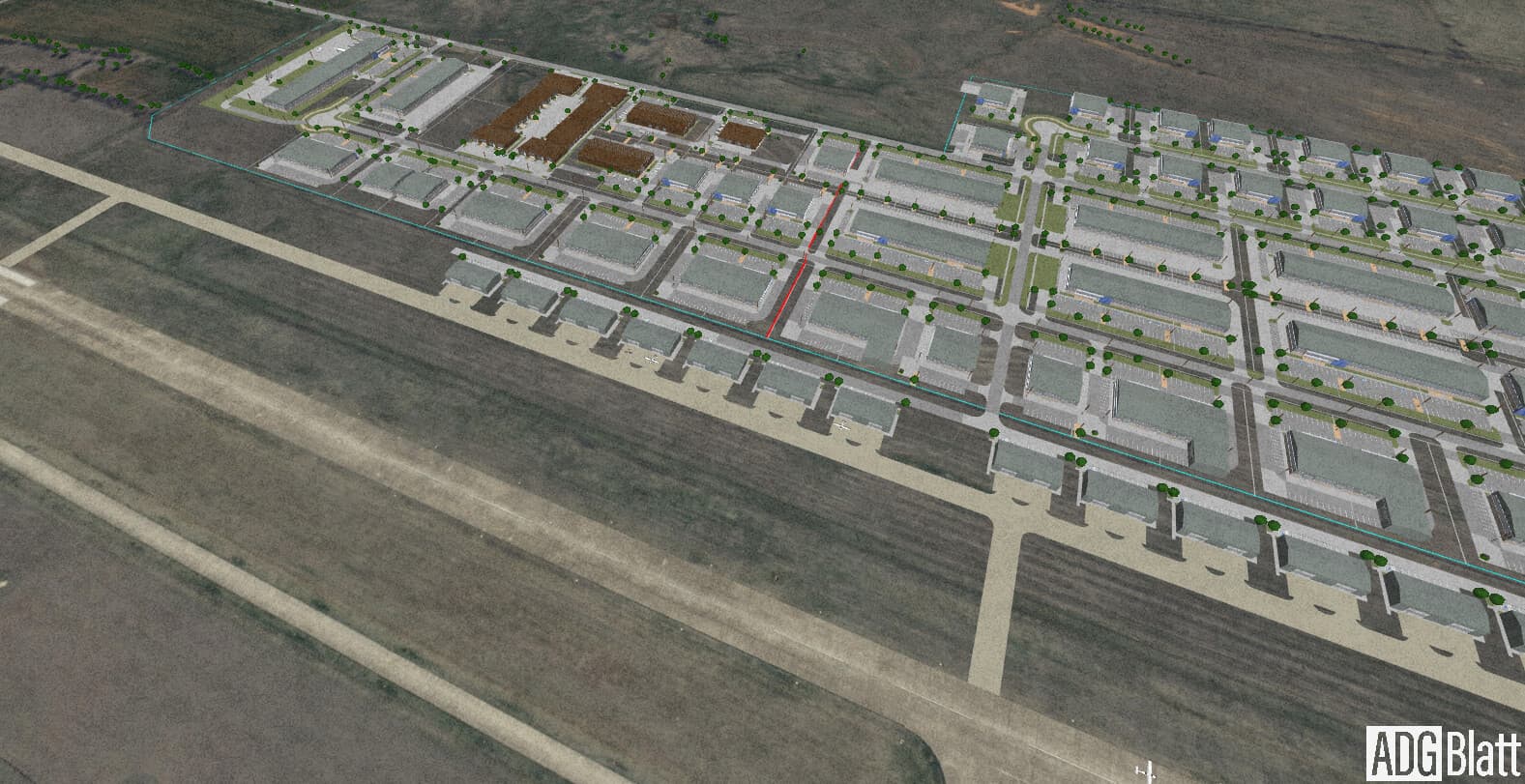
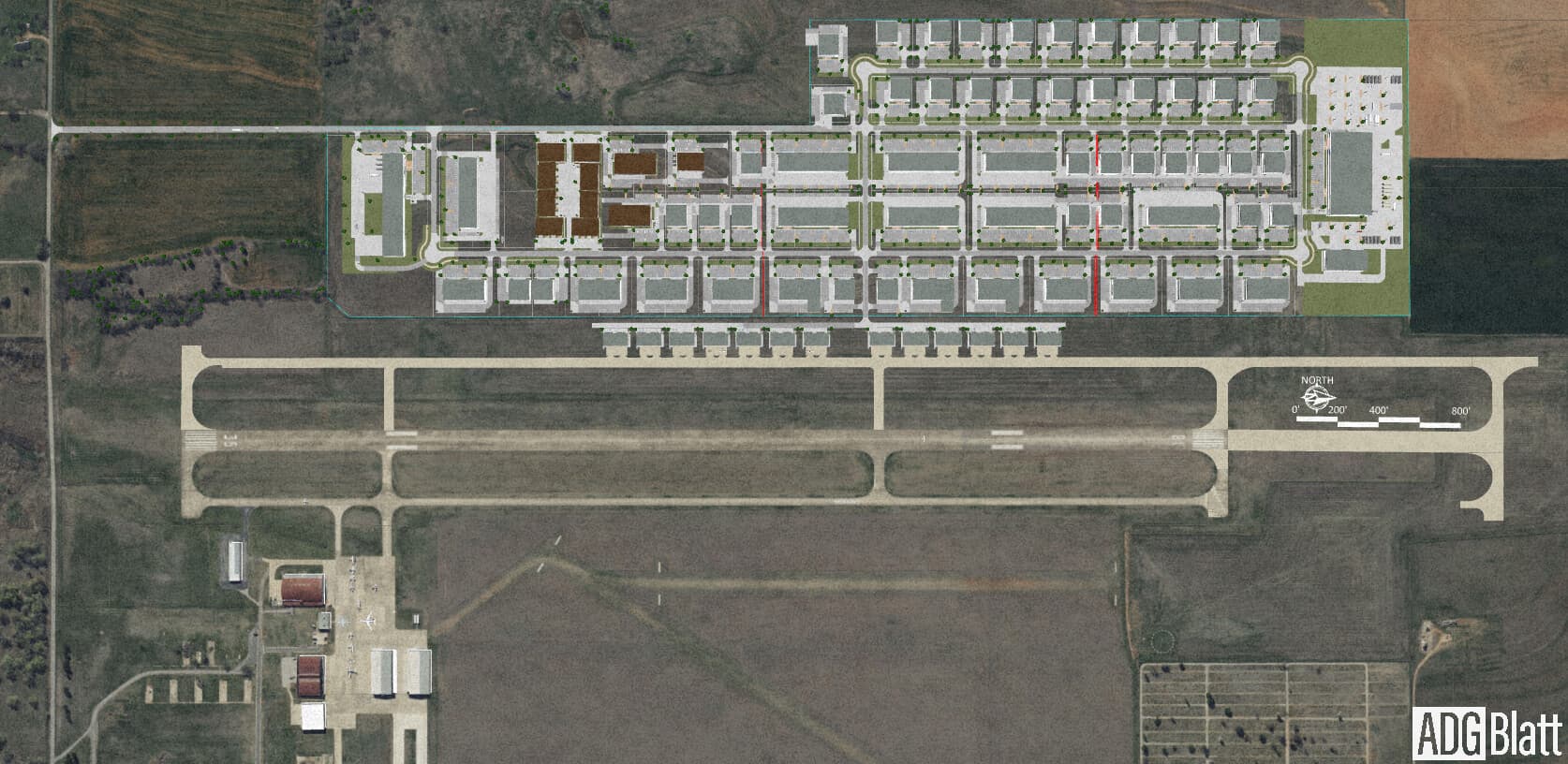
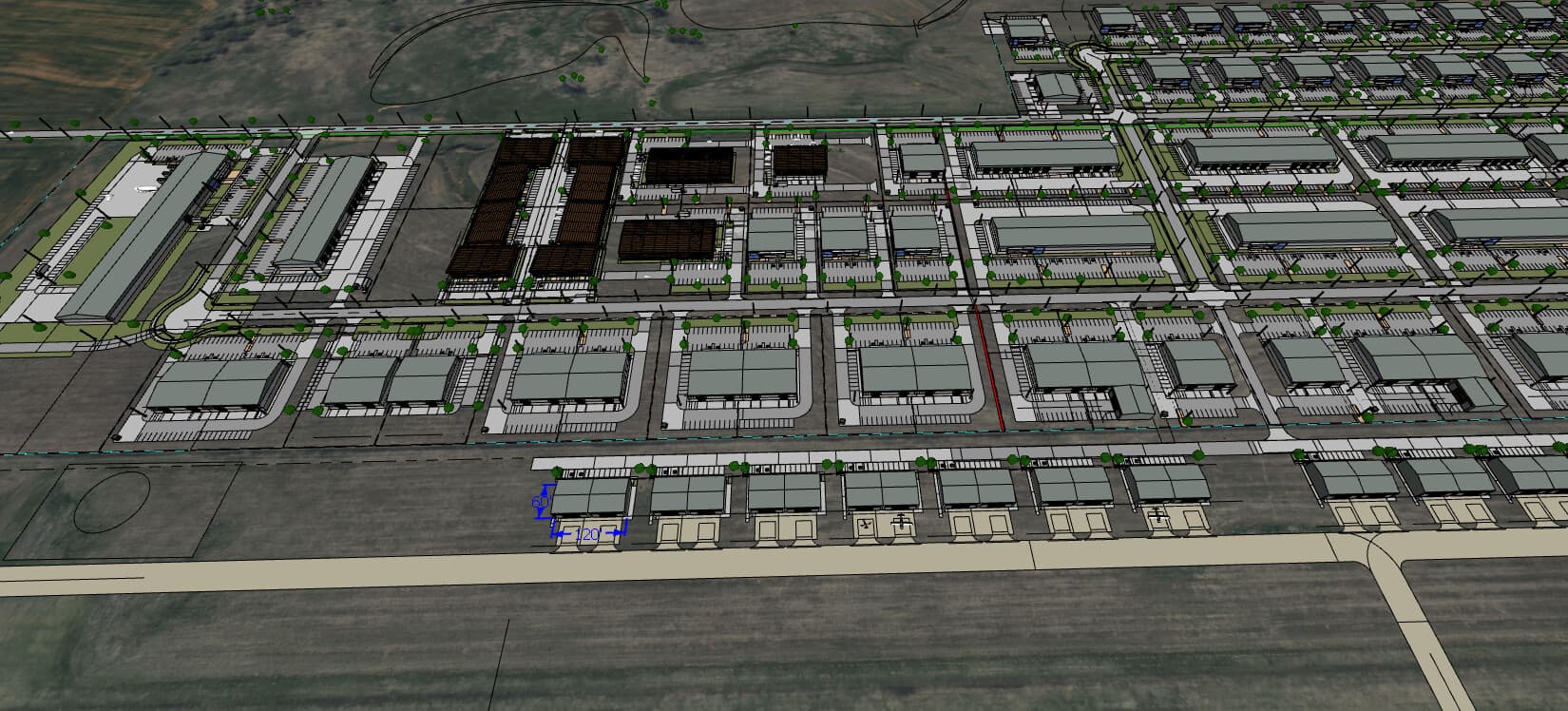
Site plan and renderings by ADG Blatt
The Master Plan
Shovel-Ready, Adjacent to the Runway
The park runs the length of the Chickasha Municipal Airport, with the building rows laid out so that production, hangars, and the taxiway share one continuous site rather than being scattered across a region.
The Buildings
Take a Bay, a Building, or a Pad
The park is built as repeating spec buildings rather than one monolithic facility, so a small shop and a large-format producer can both find a footprint that fits without waiting on a custom build.
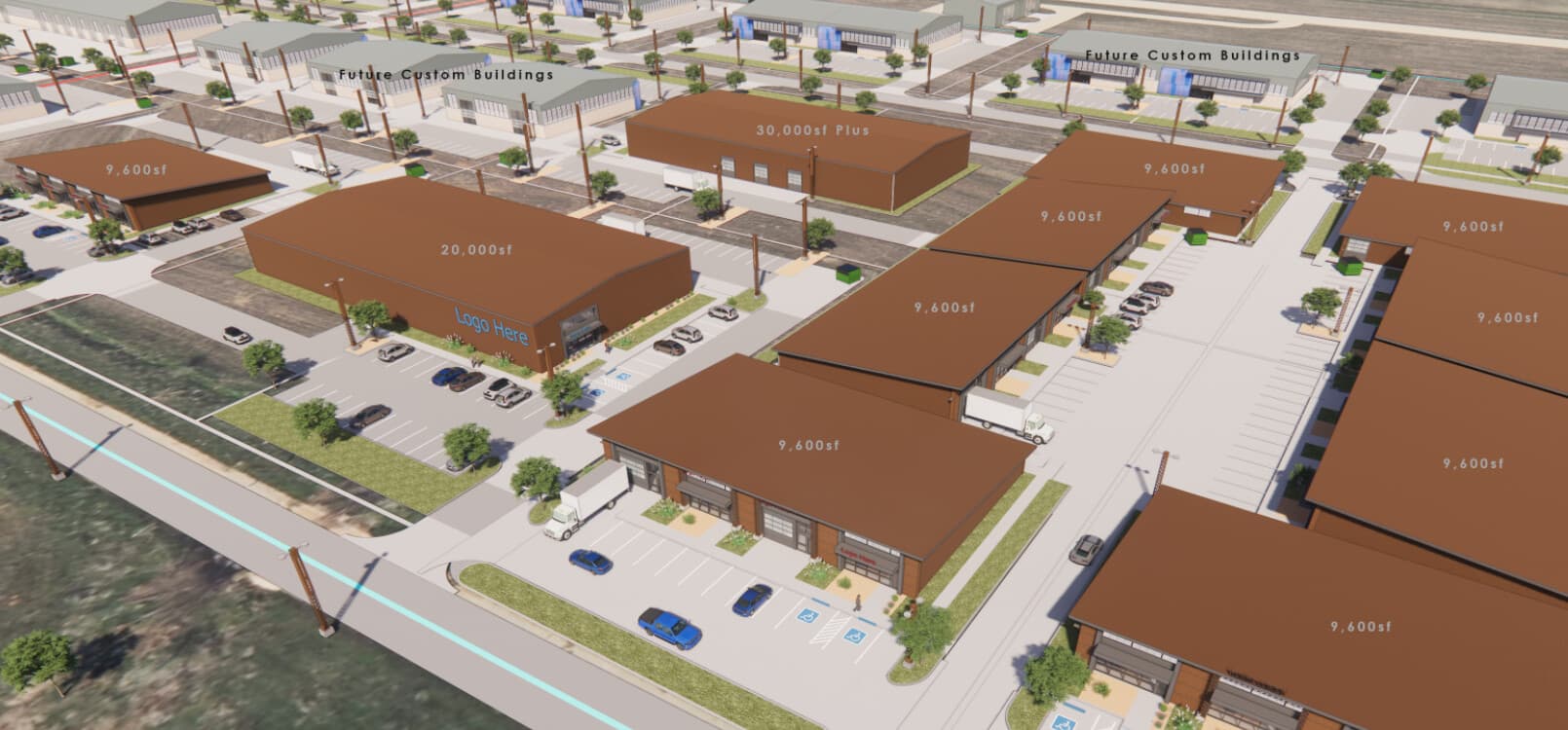
9,600 sf
Spec Shop Buildings
The repeating unit of the park. Drive-in bays, dedicated parking and truck apron, built out in rows so a manufacturer can take one unit or several adjacent ones.
20,000 sf
Anchor Building
Larger single-tenant footprint at the park entrance, with street presence and signage for an anchor manufacturer.
30,000 sf +
Large-Format Production
Clear-span production space for high-volume machining, forming, and assembly lines that need continuous floor.
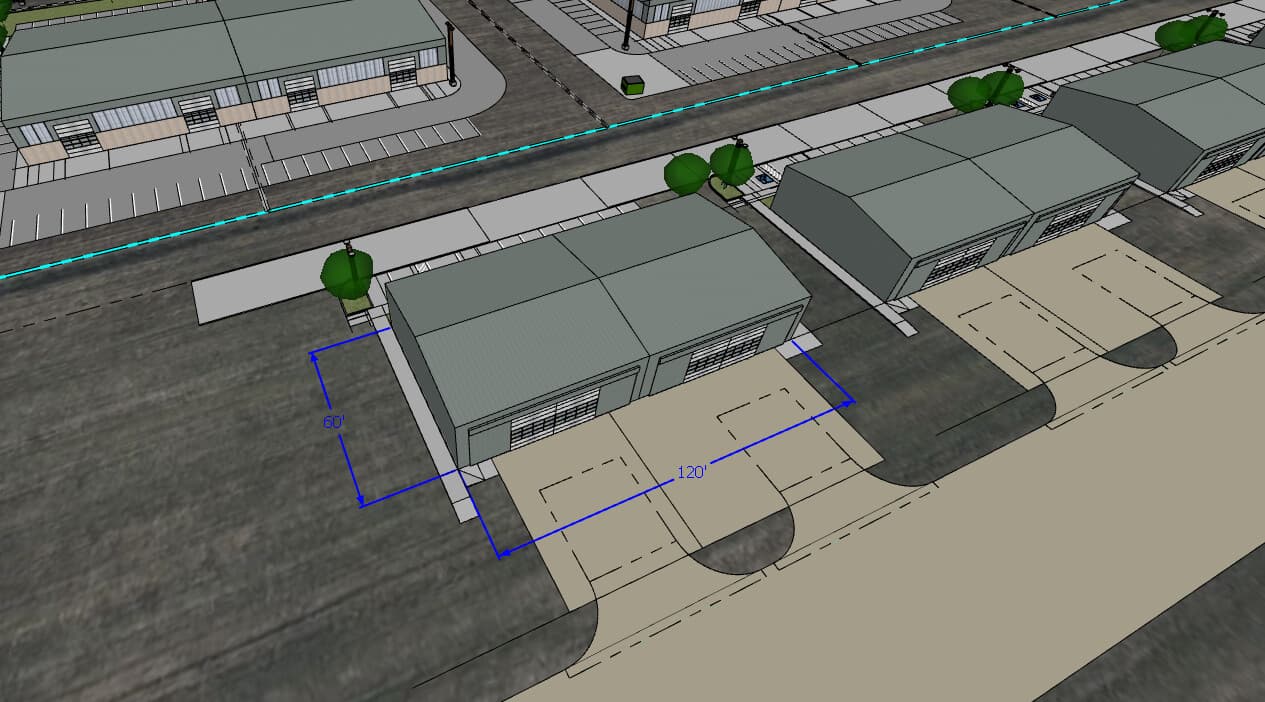
60 x 120 ft
Shop Bays
Individual drive-in shop bays with roll-up doors and hardstand, sized for machine shops, tooling, and finishing operations.
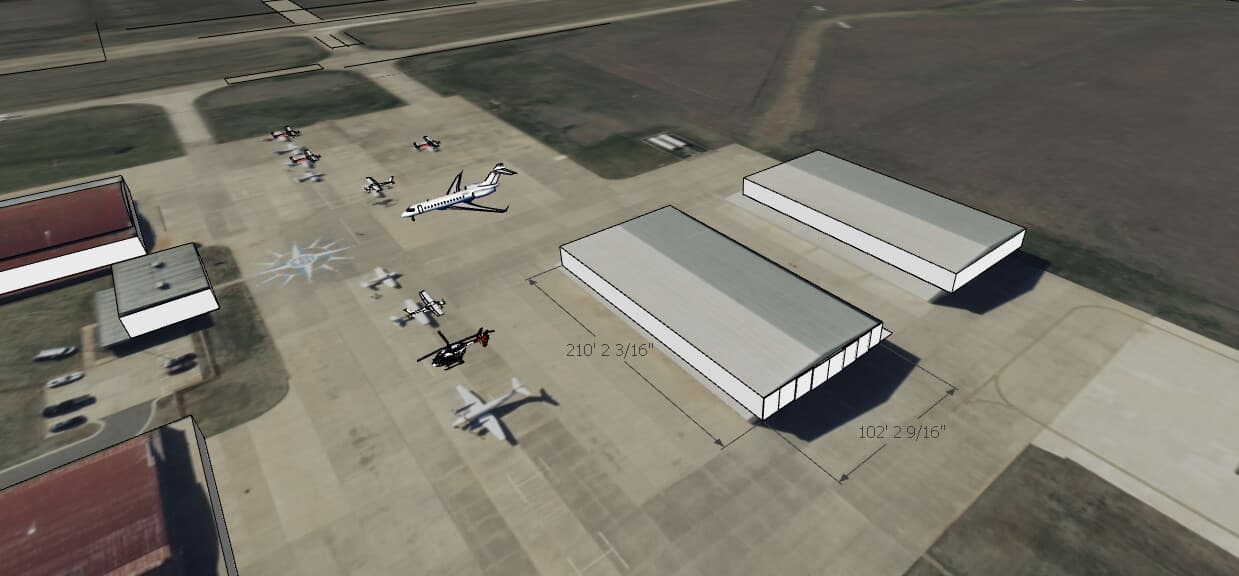
210 x 102 ft
Airport Hangars
Hangar structures on the airport apron with direct taxiway access, for aircraft-adjacent work and large assembly.
Build to suit
Future Custom Buildings
Reserved pads throughout the master plan for tenants whose process requires a purpose-built facility.
Shared Infrastructure
What the Hub Operates
The capital barrier that keeps capable manufacturers out of defense work is rarely the machine tool. It is qualification, inspection, and the engineering data around the part. Those are shared campus resources.
Reverse-Engineering Cell
Scanning, model reconstruction, and drawing package production — the physical counterpart to closing a technical data gap.
Qualification and NDE Lab
Shared non-destructive evaluation, metrology, and test. Resident manufacturers qualify parts without each building their own lab.
Additive and Precision Machining
Production space for metal and polymer additive alongside precision machining — the depth that proves a part when organic capacity is committed.
Shared Digital Platform
The connective tissue between hub engineering and the wing's teams at Tinker, so the campus and the data work operate as one system.
MILHUB is positioned as an America Makes hub location for Oklahoma, which ties campus practice to the additive qualification standards and supplier accreditation pathways already recognized across the defense industrial base.
The Team
Partners Bring the Infrastructure
No single organization can stand up a hub, a data platform, and a workforce pipeline at once. Each partner brings a piece that already exists, and the wing shapes the priorities.
City of Chickasha
Site, infrastructure, and the industrial park partnership
USAO
Workforce and education pipeline for advanced manufacturing careers
Siemens
Digital engineering toolchain — CAD, PLM, and simulation backbone
NCMS
Collaboration vehicles connecting DoD sustainment to industry
America Makes
Additive qualification standards, project calls, supplier accreditation
XRD
AI platform, analytics, and side-by-side engineering support
Where the wing shapes it
- The consortium technology roadmap already calls for standardized reverse engineering — wing priorities can define the first project.
- Sustainment project calls require engineering-authority participation on the team, which keeps that work mission-driven.
- Supplier-qualification groups run on a recurring cycle through 2030 — hub manufacturers enter that pipeline and grow the base the wing buys from.
- Qualification standards now in award get adopted into hub practice, teaming with winners rather than reinventing their work.
Two interfaces, no commingling
Partner contributions and Air Force mission work meet at exactly two places: the Government-owned evidence graph (the data) and the Chickasha hub (the place). Campus build-out is never a dependency of the mission work, and mission work never depends on the campus schedule.
That separation is deliberate. It means a delay in one lane cannot stall the other, and the Air Force keeps its decision authority at every gate regardless of who funds what.
Logistics
Three Modes on One Site
Chickasha sits deep in the U.S. interior with highway, Class I rail, and a 5,101 ft runway converging on the same 284 acres — and the largest depot in Air Force Materiel Command less than an hour up the road.
Highway
- Daily truck runs to Tinker AFB — 51 miles, about 45 minutes
- I-44 access via US-81 and US-62
- Overnight reach to Dallas, Wichita, and Tulsa
Rail
- Union Pacific Railroad (Class I carrier)
- Stillwater Central Railroad (Watco short line)
- Both interchange at Chickasha, connecting through Oklahoma City
Air
- 5,101 ft concrete runway (RWY 17/35) at KCHK
- Jet-A and AVGAS fueling on site
- Hangars with direct taxiway access from the park
35.0481° N, 97.9678° W • 284 Acres • Chickasha Municipal Airport (KCHK)
The Site Is Ready. The Work Is Queued.
Manufacturers who want a footprint, and government teams who want the parts problem worked, start the same way.